
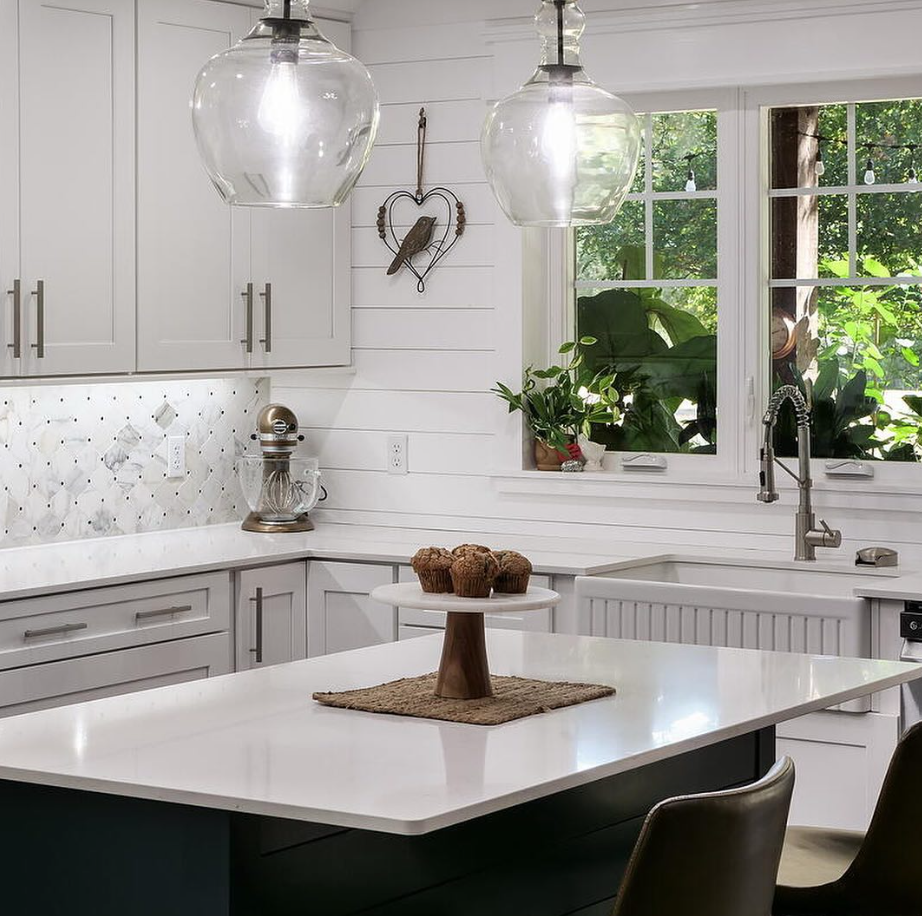
When planning a kitchen or bathroom project in San Antonio, TX, countertop thickness often comes up later in the decision process. Most homeowners focus on color and material first, then discover thickness options during design or fabrication discussions. Choosing between 4cm countertops and standard thickness can affect appearance, installation, and long-term performance.
Understanding how these options differ helps homeowners, designers, and builders select a countertop that fits both the space and how it will be used.
What Is the Difference Between 4cm Countertops and Standard Thickness?
Standard countertop thickness typically refers to stone slabs that are around 2cm or 3cm thick. These are commonly used in residential projects and are often paired with edge build-ups when a thicker look is desired.
4cm countertops are thicker slabs that create a more substantial edge profile without additional lamination. The visual impact is immediate. The countertop appears heavier and more solid, which appeals to homeowners seeking a bold, continuous surface.
In San Antonio homes, both options are used successfully. The right choice depends on cabinet design, layout, and how the countertop integrates with the rest of the space.
Pro tip: Thickness affects how edges look more than how the surface performs. Always review edge profiles with thickness in mind.
Visual Impact and Design Considerations
4cm countertops are often chosen for kitchens with large islands or open layouts. The thicker edge becomes a design feature, especially in spaces where countertops are visible from multiple angles.
Standard thickness countertops offer more flexibility. They pair well with a wider range of cabinet styles and allow designers to control the final look through edge profiles.
In San Antonio, where kitchens often serve as gathering spaces, visual balance matters. A thick countertop can anchor a large island, while standard thickness may suit perimeter counters better.
Pro tip: Consider mixing thicknesses. A 4cm island paired with standard thickness perimeter counters can create contrast without overwhelming the space.
Installation Differences That Matter
Installation requirements vary between 4cm countertops and standard thickness options. Thicker slabs weigh more and may require additional planning for cabinet support.
Standard thickness countertops are more common, which means many cabinets are already designed to accommodate them. Installation is often more straightforward, especially in remodels where existing cabinets are being reused.
With 4cm countertops, precise templating and cabinet assessment are critical. Cabinets must be level and structurally sound before installation.
True Blue Surfaces evaluates cabinet conditions and layout before recommending countertop thickness. This approach helps ensure the chosen option performs well over time.
For installation planning details, homeowners can review this.
Performance and Daily Use
From a performance standpoint, both 4cm and standard thickness countertops handle daily kitchen and bathroom use effectively when installed correctly. Thickness alone does not determine durability.
The key factors remain proper support, seam placement, and fabrication quality. A thinner countertop that is well supported often performs better than a thicker slab installed