Comparing granite vs. quartz in Austin starts with what you want from your kitchen countertop. Quartz suits you if skipping the sealing task matters.
Granite suits you if you want the pattern of a particular natural slab and accept its care needs. Both hold up to everyday use, and both need protection from hot cookware.
Here’s how to compare their care and appearance, then check the installation details that affect your choice and quote.
Granite vs. Quartz in Austin: Start With How You Use Your Kitchen
Choose quartz if avoiding the sealing task is a priority. Choose granite if you want a particular natural slab and are comfortable with its care requirements.
Granite is quarried natural stone. Engineered quartz combines mineral components with binders and pigments, giving manufacturers control over its color and pattern. Quartzite is a separate natural stone, despite the similar name.
Use your household priorities to narrow the choice:
- You want a countertop without a sealing schedule. Quartz countertop options fit that preference. You’ll still need to clean spills and protect the surface from heat.
- You want the movement or mineral pattern of a specific slab. Look at granite countertop options and review the full stone before approving its layout.
- You cook often. Either material can suit an active kitchen. Think about cleanup and whether you’re willing to check granite’s sealing needs. Keep trivets within reach for both.
Review the whole slab or large design display before choosing. Granite changes across a slab. Quartz offers a more controlled design, but a small sample still won’t show how a large pattern repeats across an island.
Choose the surface you’ll enjoy using and maintaining. A material’s popularity doesn’t tell you whether its care routine fits your household.
We Do A Marvelous Job!
What Countertop Material Adds the Most Resale Value?
Whichever material you're leaning toward, our team can help you weigh the tradeoffs for your specific kitchen, budget, and goals, whether you're renovating to sell or updating a home you plan to stay in for years.
Compare Care, Heat, and Everyday Wear
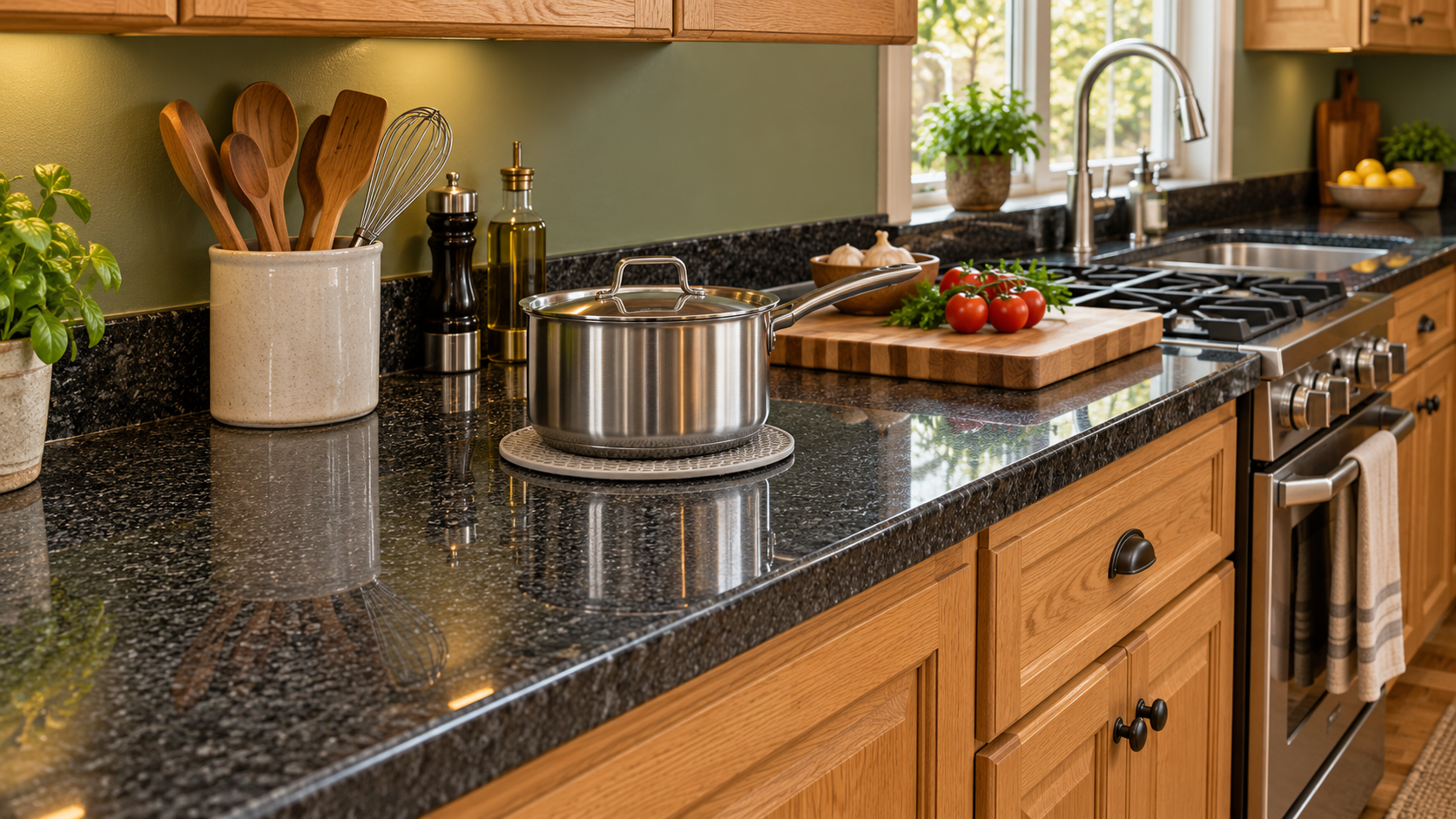
Sealing and cleanup: Quartz is nonporous and generally doesn’t require sealing. Granite’s absorption varies, so its care should follow the selected stone and sealer.
Both need prompt cleanup. Quartz can still mark or stain. Sealed granite can still absorb a spill, especially if it sits too long. Use the cleaner recommended for your material, rather than assuming one household product suits both.
Heat: Granite tolerates heat well, but concentrated heat can cause thermal stress. Quartz’s binders can suffer heat damage. Use trivets for hot pans and check the product’s guidance for countertop appliances.
Caesarstone’s quartz guidance calls for heat protection, while the Natural Stone Institute discourages direct localized heat on granite. Good heat resistance doesn’t replace that habit.
Scratches and chips: Both resist daily wear, but a hard impact can damage either surface. Edges and corners are vulnerable to hard impacts. Use cutting boards, and ask your fabricator about damage instead of attempting a repair that could alter the finish.
Around the sink, dry splashes before deposits build up. For persistent marks, follow the installed product’s care instructions. Quartz and granite don’t share a universal cleaning recipe.
These differences make quartz simpler if sealing is a task you’d rather skip. Granite remains a practical choice when you’re comfortable checking its protection as part of routine care.
Compare the Full Slab and the Installed Quote
