
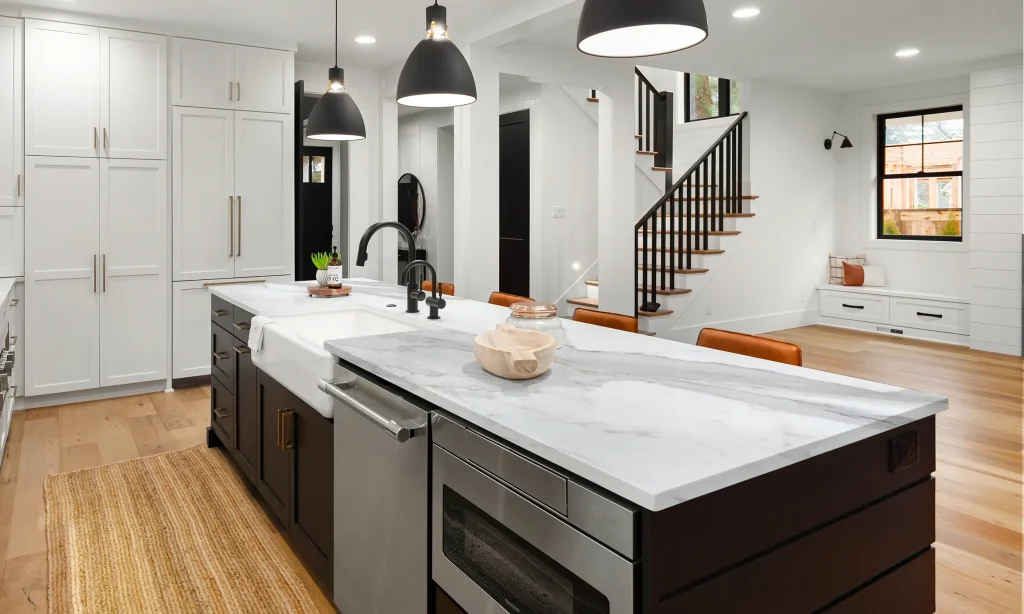
Calacatta-style surfaces continue to be a popular choice for kitchens and bathrooms in San Antonio, TX, especially in homes where clean layouts and natural light play a major role. While many homeowners are familiar with classic Calacatta looks, Calacatta Caramella has emerged as a distinct option that changes how these spaces feel.
Understanding the differences between Calacatta Caramella and classic Calacatta styles helps homeowners, designers, and builders choose a surface that aligns with how the space will be used and how it should age over time.
What Defines Classic Calacatta Styles?
Classic Calacatta styles are known for bright white backgrounds with bold gray veining. This look has been used in kitchens and bathrooms for years and remains a reference point for many renovations.
In San Antonio homes, classic Calacatta styles are often selected for kitchens that aim for contrast. White cabinetry paired with strong veining creates a crisp visual that works well in open floor plans.
These styles tend to emphasize pattern. Veining often runs with clear direction and can become a focal point on islands or full-height backsplashes.
Pro tip: When using classic Calacatta styles, plan slab layout carefully so veining flows naturally across seams.
Classic Calacatta surfaces are commonly specified in both natural stone and engineered options, giving homeowners flexibility based on performance needs.

How Calacatta Caramella Changes the Look and Feel
Calacatta Caramella introduces warmer tones into the Calacatta category. Instead of relying only on gray veining, it incorporates caramel, beige, and soft gold accents.
For San Antonio kitchens, this warmth often pairs better with wood cabinetry, warmer flooring, and transitional design styles. It softens the overall look without losing the clarity that Calacatta surfaces are known for.
Calacatta Caramella tends to read more balanced in spaces with mixed materials. It works well in homes that blend modern and traditional elements rather than leaning fully one direction.
Pro tip: If your kitchen includes warm metals or wood finishes, Calacatta Caramella often integrates more naturally than classic gray veining.
You can explore quartz options that include Calacatta-inspired styles here.

Performance and Maintenance Considerations
From a performance standpoint, the choice between Calacatta Caramella and classic Calacatta often depends on material type rather than pattern alone.
Engineered surfaces offer consistency and predictable results, which appeals to builders and designers managing multiple installations. Natural stone versions provide variation and depth but require careful selection and placement.
In busy kitchens, patterns with subtle color variation can help disguise everyday marks better than very high-contrast designs.
Pro tip: Consider how much natural light your space receives. High contrast veining appears stronger in bright rooms.
For homeowners planning both kitchens and bathrooms, mixing Calacatta styles across spaces can create continuity without repetition.
Choosing the Right Style for Kitchens vs Bathrooms
Kitchens place higher demands on countertops. Islands, prep areas, and seating zones all influence how the surface is seen and used.
Classic Calacatta styles often work well on large islands where veining can be showcased. Calacatta Caramella is frequently chosen for perimeter counters or kitchens with extensive wood cabinetry.
Bathrooms allow more flexibility. Vanities, tub surrounds, and shower walls benefit from softer patterns that do not dominate smaller spaces.
Pro tip: In bathrooms with limited natural light, warmer veining can prevent the space from feeling stark.

Installation Planning Makes the Difference
Regardless of style, installation planning determines how the final surface performs and looks. Seam placement, edge details, and slab orientation all affect the result.
Working with a local fabricator familiar with San Antonio homes helps ensure selections are translated correctly during fabrication.
True Blue Surfaces works with homeowners, designers, and builders to review Calacatta-style options in person and plan layouts before fabrication begins. This approach reduces surprises and helps align design intent with real-world installation.
Which Style Is the Better Choice?
There is no single right answer. Classic Calacatta styles suit homes that favor contrast and strong visual lines. Calacatta Caramella fits spaces that lean warmer and more layered.
The smart choice depends on cabinetry, lighting, and how the space is used daily. Reviewing full slabs and samples together with other finishes helps clarify the decision.
Pro tip: Bring cabinet samples and flooring references when reviewing Calacatta options. Context matters more than pattern alone.
Ready to Choose the Right Calacatta Style?
Selecting between Calacatta Caramella and classic Calacatta styles is about more than appearance. It is about how the surface supports your home and lifestyle over time.
If you are planning a kitchen or bathroom project in San Antonio, TX, contact True Blue Surfaces to review Calacatta-style options and discuss installation planning. Their team helps homeowners and professionals choose surfaces that fit both design goals and real-world use.
The right Calacatta style brings balance to the space. True Blue Surfaces is ready to help you choose with confidence.