
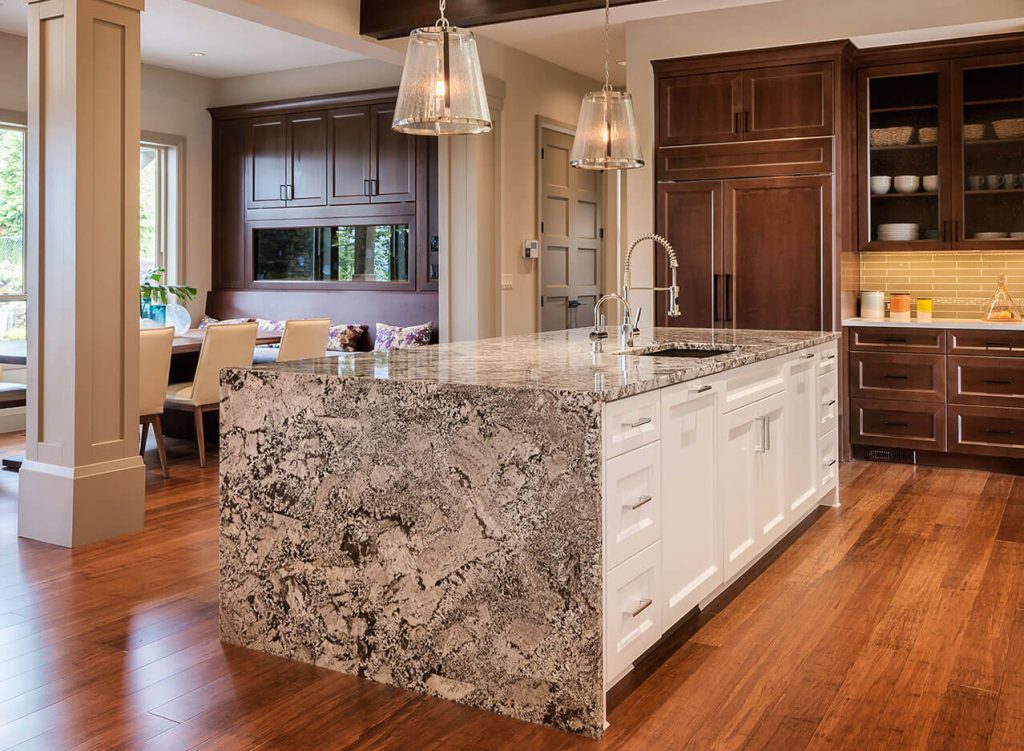
Granite remains a smart countertop choice across Austin and San Antonio because it’s a true natural stone with real variation from slab to slab. That matters in Central Texas homes where kitchens often connect to living areas, and the island becomes a focal point. Granite also holds up well to day-to-day cooking, including heat and normal wear, as long as the layout and install are handled correctly.
If you’re early in the process and want a quick refresher on color families and how they read in a finished kitchen, start here: The Appealing Colors Of Granite Countertops.
How To Compare Granite Slabs Without Overthinking It
When people say “I want a granite like this,” they’re usually reacting to three things: background color, movement, and how consistent the slab looks across a large area.
Background Color
Check the slab’s main base tone in both showroom light and daylight. In Austin, bright natural light can make a warm granite look lighter than expected. In San Antonio, warmer interior lighting can pull out gold or brown tones.
Movement And Pattern Scale
A slab with large movement can look calm up close, then feel busy from across an open floor plan. If you have an island that faces the living room, step back 10 to 15 feet and look again.
Fissures Vs Cracks
Many natural granites have fissures, which are part of the stone’s formation. Ask your fabricator to show you what’s normal for that specific slab and what would be considered damage.
Pro Tip: Bring one cabinet door sample and one flooring sample. Hold them directly to the slab. This acts fast, especially with greige paints and mixed metals.
For a deeper slab-selection checklist, this article is useful: 8 Must-Know Tips For Choosing The Perfect Granite Countertop.

How To Choose Edge Profiles That Match Real Life
Edges are not just a style decision. They affect cleaning, comfort, and how vulnerable corners are to chips.
A few practical considerations:
- Busy kitchens and kid zones: A slightly softened edge can be more forgiving around corners.
- Modern cabinets: Simple eased or small bevel edges usually look right.
- Traditional designs: Ogee and more detailed edges can work, but they show their profile more, so confirm the look in person.