
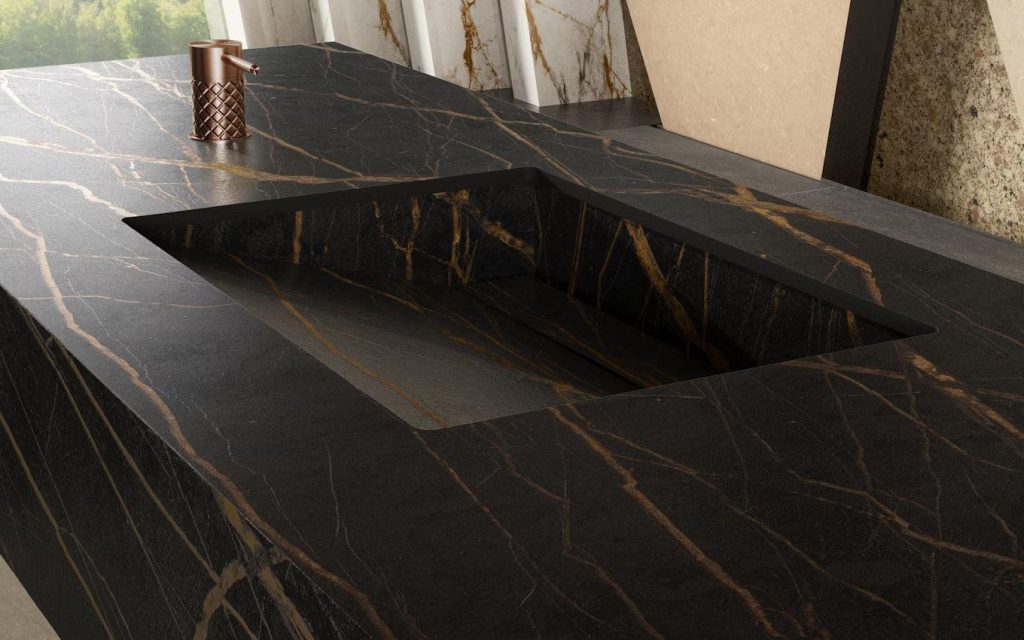
Porcelain has become one of the toughest countertop options on the market, and homeowners across Central Texas are taking notice. It handles the things that wear other surfaces down, and it needs almost no maintenance.
We fabricate and install porcelain for kitchens, baths, and outdoor spaces across Austin and Central Texas. Here is why it performs so well, and how to choose the right slab for your home.
Heat Resistance You Can Count On
Porcelain is made under extreme heat, so it handles hot pans, pots, and small appliances without scorching or discoloring. You can set a hot pan straight from the stove onto it.
That makes porcelain a strong pick for serious cooks and busy kitchens.
It also handles the temperature swings common in Central Texas, so it works just as well on a covered patio as it does indoors.
Pro tip: Even with a heatproof surface, using trivets is a good habit. It protects the counter and keeps your cookware from sliding around.
Stain Resistance for Everyday Life
Porcelain is non-porous, so liquids sit on top instead of soaking in. Coffee, wine, oil, and juice wipe away without leaving a mark, and it never needs sealing.
That combination makes it one of the easiest surfaces to keep clean in a hard-working kitchen.
The same non-porous surface also shrugs off the hard water spots common in Central Texas, since minerals wipe away instead of settling into the stone.
Pro tip: Because porcelain does not absorb liquids, you can skip the yearly sealing that natural stone needs. A simple wipe keeps it looking new.
Scratch and Chip Resistance
Porcelain is very hard, which helps it resist scratches from knives and daily use. The color and pattern also run through the surface in many products, so light wear does not show the way it can on other materials.
It stands up well to the demands of both homes and commercial spaces.
One thing to know is that porcelain is very hard but can chip at an exposed edge if it takes a sharp, direct hit. Skilled fabrication and the right edge profile go a long way toward preventing that.
Pro tip: Porcelain resists scratches, but a cutting board still protects your knives. Cutting directly on any hard surface dulls the blade fast.