
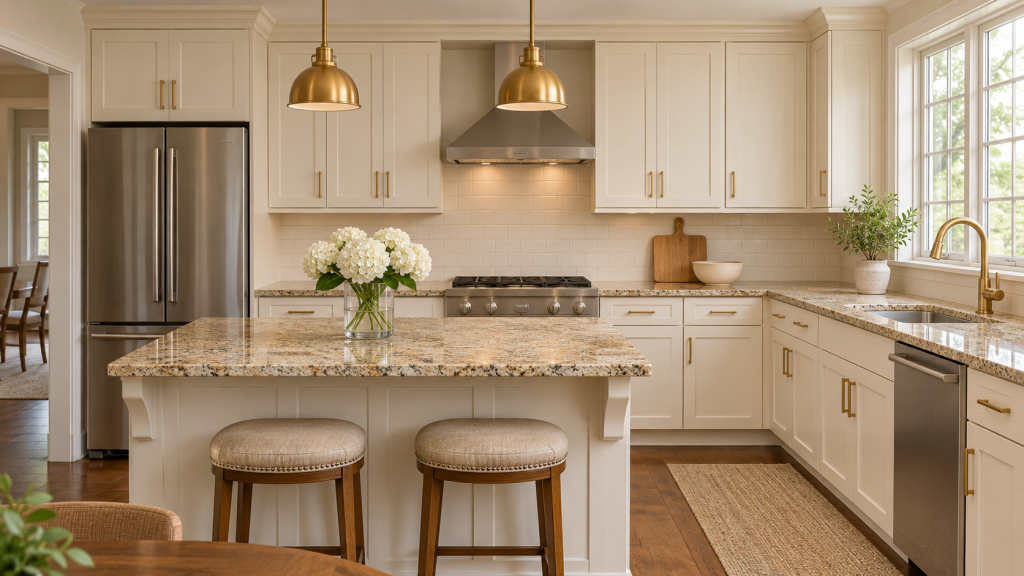
Giallo granite countertops bring cream and gold tones into a kitchen, but the name alone won’t tell you how the stone will look beside your cabinets. The actual slab matters.
A small sample can hide changes in pattern that become obvious across an island. Before you choose, compare the stone with the finishes you’re keeping.
Here’s how to distinguish common Giallo selections and review the details that affect both appearance and fabrication.
What Are Giallo Granite Countertops?
Giallo granite describes several natural stone selections sold under names that include “Giallo,” the Italian word for yellow. It doesn’t identify one uniform color or a single stone from one quarry.
Some selections have a pale cream background with brown or gray details. Others carry stronger gold tones that become more noticeable across a long counter.
That distinction matters when you’re trying to keep existing cabinets. A stone that looks neutral on a screen may read much warmer once it sits above a white cabinet door.
The name isn’t a quality grade and won’t tell you how much liquid a slab absorbs or what the countertop will cost.
Ask for the complete stone name and review the full slab available for your project. Keep a record of that selection so the quote and the layout approval refer to the same material.
Giallo Ornamental and Giallo Fantasia Are Different Selections
Two stones with Giallo in their names can produce different results in the same room. Ornamental and Fantasia are useful examples because their backgrounds and darker details deserve separate consideration.
Giallo Ornamental
MSI describes Giallo Ornamental as having a creamy white background with dark gray and brown patterning. Its listed accents include gold and taupe.
Start here if you’re looking for a lighter background with warm details. Still, inspect the full slab: the balance of pale areas and darker minerals affects how busy the countertop looks.
Giallo Fantasia
MSI’s Giallo Fantasia has a cream background with gold, gray, and dark brown flecks. Compare how those accents spread across the slab rather than judging it from one close-up.
These names don’t establish a common origin. MSI lists its Ornamental selection from Brazil and its Fantasia selection from China.
Supplier names help narrow your search, but you still need to approve the stone that will become your countertop. Those listings don’t confirm what True Blue Surfaces can source for your project.
Match Giallo Granite With Your Cabinets and Backsplash
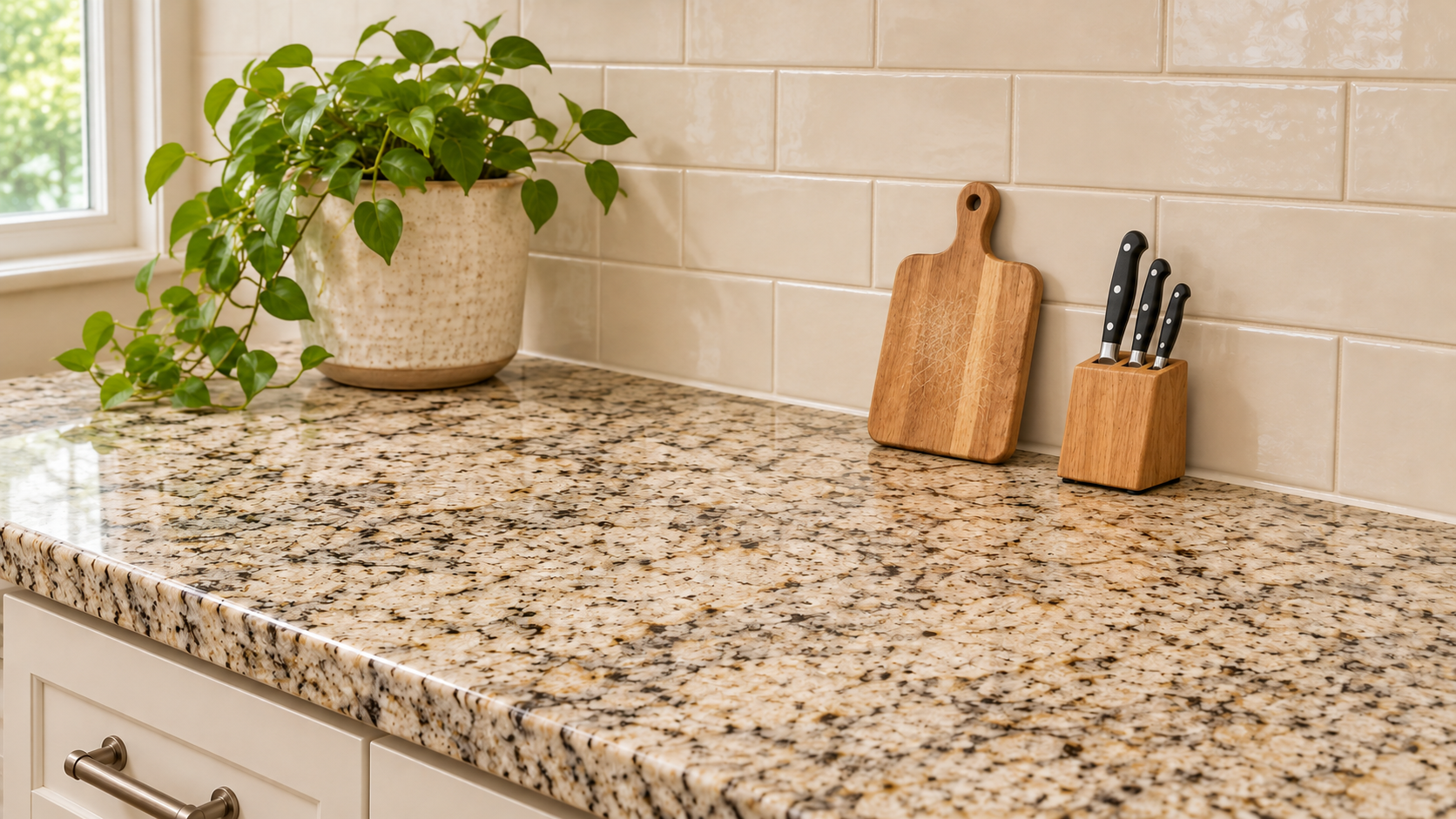
Choose the countertop beside the finishes that will remain in your kitchen. That gives you a more reliable answer than deciding whether a granite color is “classic” or “modern” on its own.
Bring a cabinet door or finish sample when you review stone, since phone photos can shift color under warm bulbs or strong daylight.
Start with these pairings:
- Cream or off-white cabinets: Compare the whites carefully. A cabinet that looks creamy alone may appear yellow beside a paler stone background, or the reverse.
- Natural wood cabinets: Look at the wood’s underlying color. A red-toned finish creates a different pairing from muted oak, even when both cabinets are light.
- Dark cabinets: Check the contrast from across the room. A lighter slab can define the counter without requiring a bright white background.