
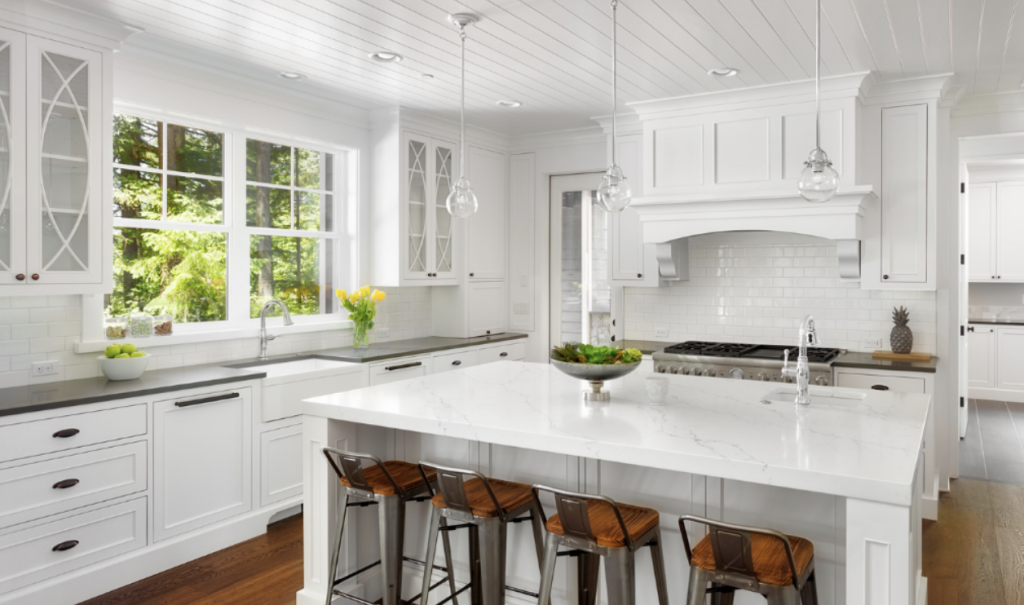
Matching countertops with kitchen cabinets sounds simple until you start comparing actual samples.
A cabinet finish that looked right online can shift under natural light. A stone color that seemed neutral can read warmer or cooler once it sits next to flooring, backsplash tile, and hardware. At True Blue Surfaces, we help homeowners, designers, and builders in Austin, TX work through those details before a selection turns into a regret. Our Austin design center and fabrication facility is located at 11102 Bluff Bend Drive, and our process is built around design, fabrication, and installation instead of disconnected handoffs.
Start with the Cabinet Undertone First
Before you choose a slab, take a hard look at your cabinet color.
White cabinets are not all the same. Some lean creamy or beige. Others pull gray or blue. Wood cabinets can carry red, gold, brown, or muted taupe undertones. That matters because the countertop should either support that undertone or create a deliberate contrast that still feels balanced.
True Blue Surfaces’ cabinetry-matching guidance points out that warm-toned cabinets usually pair better with warm countertop colors, while cooler cabinet tones tend to work better with cooler countertop palettes. That is one of the easiest ways to avoid a kitchen that feels slightly off even when every individual piece looks good on its own.
Pro Tip: Bring the actual cabinet door or finish sample with you when you look at stone. Printed color cards and phone photos can shift the tone too much to trust on their own.
If you want a starting point for comparing surfaces, explore our stone materials and see how different countertop options can work with different cabinet styles.
Think About Contrast Before You Think About Color Names
A lot of people choose a countertop by color name first. In most kitchens, contrast matters more.
If your cabinets are dark, a lighter countertop can keep the room from feeling heavy. If your cabinets are light, a deeper countertop can create definition and help the cabinetry stand out. True Blue Surfaces’ countertop and cabinetry article recommends using contrast carefully so each surface has its own role without fighting for attention.
This is also where room size matters. In smaller kitchens, too much contrast can feel choppy. In larger kitchens, too little contrast can make the room feel flat. The goal is not a perfect match. The goal is a combination that makes the whole kitchen feel settled.
Pro Tip: When comparing samples, step back farther than you think you need to. A pairing that looks good from six inches away can feel very different from across the room.