
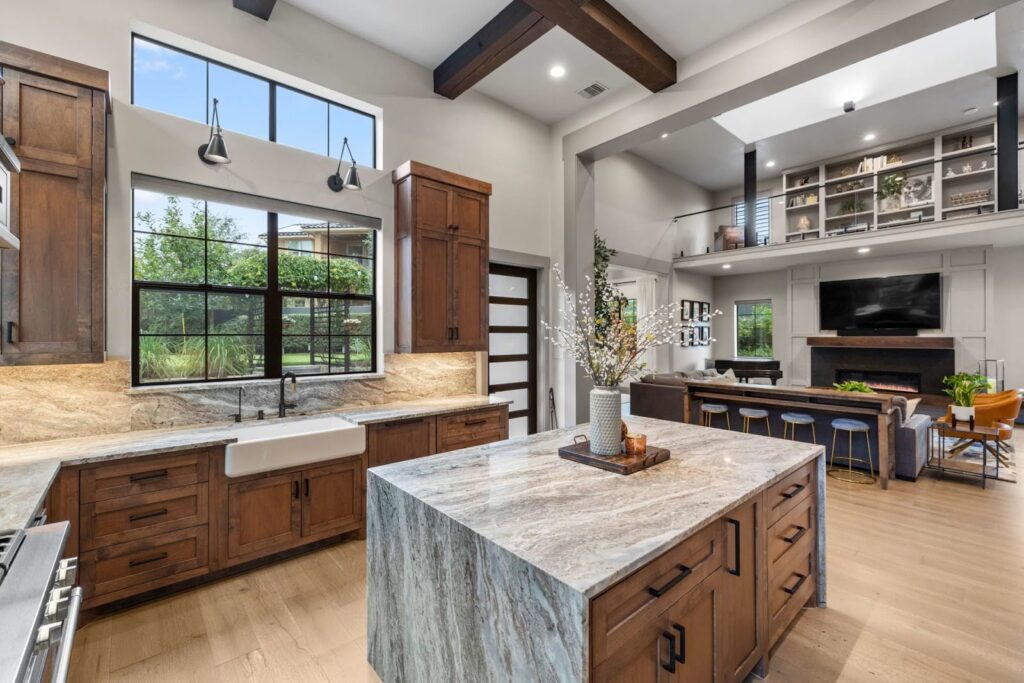
Bathrooms in 2025 are embracing clarity, simplicity, and materials that speak for themselves. This means that natural stone’s moment in the sun continues, and it’s being used in many new and exciting ways.
One of the most prominent features shaping this new aesthetic is the floating stone vanity. Defined by open space or floating cabinets beneath and a sleek slab of stone above, these vanities balance architectural strength with visual lightness. The result is a bathroom that feels intentional and contemporary, anchored by clean geometry and elevated finishes.
Minimalism With Substance
The floating vanity trend doesn’t aim to strip away personality. Instead, it refines it. With cabinetry lifted from the floor and hardware often minimized or hidden altogether, the focus shifts to the materials. Stone surfaces, like marble, quartzite, or granite, are the centerpiece. Their organic veining, color variation, and texture become the defining element of the room. Quartz is popular too, especially for larger floating vanities. This engineered stone is lighter than natural stone options, thanks to the resins that bind the powdered quartz together, and so it requires less work to hold it up.
This minimalist style works especially well in bathrooms where space and flow matter. By removing the bulky footprint of base cabinetry, floating vanities make the room feel more expansive without sacrificing function.
Engineering The Illusion

What makes floating stone vanities so appealing is their balance of strength and lightness. Mounted with precision to support the weight of natural stone, these vanities seem to hover effortlessly. The effect is both bold and understated, giving the room a sculptural focal point without overwhelming it.
Wall-mounted hardware and under-vanity lighting further amplify the illusion. Another popular thing to do with these vanities is to combine them with LED backlighting. When backlit, the underside glows softly, making the stone slab appear as if it’s floating in place. It’s an effect that transforms the everyday act of washing up into an experience of refined luxury and creates a high-end spa-like effect.