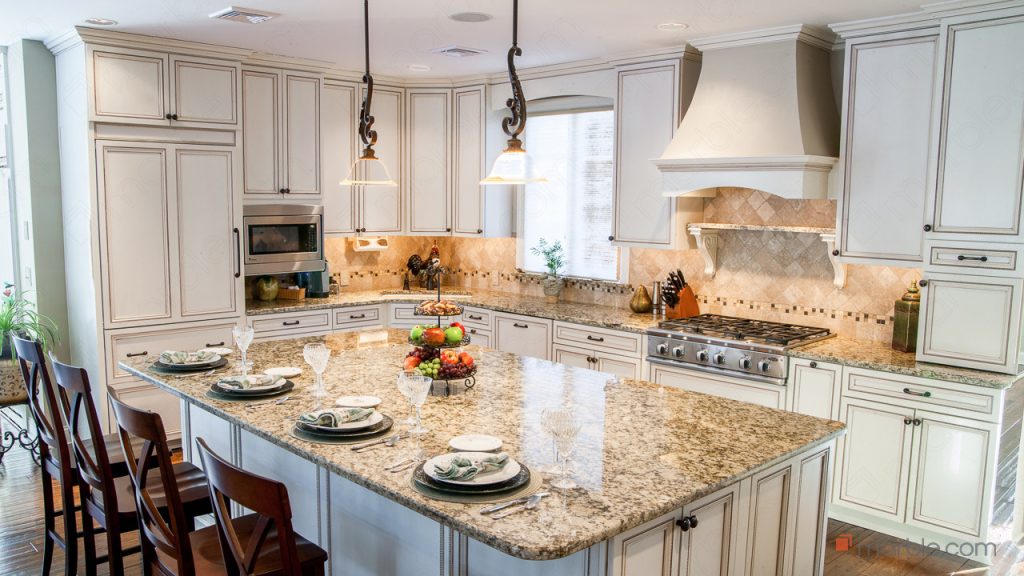
Each countertop material offers different advantages. Some homeowners prefer engineered surfaces with consistent patterns, while others want the variation that comes from natural stone.
Quartz, granite, and quartzite are often compared because they all perform well in kitchens, but they differ in appearance, maintenance needs, and overall structure.
Below is a closer look at how each option performs in real kitchens.
Quartz Countertops: Consistency And Easy Maintenance
Quartz countertops are engineered using crushed natural quartz combined with resins and pigments. This process produces slabs with consistent patterns and colors.
Many homeowners in San Antonio and Austin choose quartz because it offers a surface that is easy to clean and visually predictable. The patterns stay consistent across the slab, which makes it easier to match large islands and long countertop runs.
Quartz is often selected for kitchens that feature modern cabinetry, clean lines, and open layouts.
Common reasons homeowners choose quartz include:
- consistent color and pattern options
- a surface that resists absorbing liquids
- simple daily cleaning
- wide design flexibility
You can explore available styles on our Quartz Countertops page.
Pro Tip: When choosing quartz, look for subtle movement in the pattern. Completely solid colors may show crumbs and water spots more easily in busy kitchens.
Granite Countertops: Natural Stone Character
Granite has been used for kitchen countertops for decades and remains a strong choice for homeowners who want natural stone. Each granite slab forms naturally, which means every countertop has its own mineral pattern and color variation.
In many Hill Country homes and traditional Texas kitchens, granite works well with wood cabinetry, natural finishes, and warm color palettes.
Granite is often chosen because it offers:
- natural mineral patterns
- strong resistance to everyday kitchen use
- a surface that works well in both indoor and outdoor kitchens
- a unique appearance in every slab
You can learn more about granite options on our Stone Countertops page.
Pro Tip: Always view the full granite slab before making a final decision. Small samples do not show the full pattern movement that will appear across an island or countertop run.
We Do A Marvelous Job!
Looking For The Best Stone For Kitchen Countertops?
If you are planning a kitchen upgrade, one of the first questions that comes up is what is the best stone for kitchen countertops. The answer depends on how the kitchen will be used, the design style of the home, and how much maintenance you want to handle over time. Get a free quote and learn more.
Quartzite Countertops: Natural Stone With Strength
Quartzite is another natural stone that many homeowners compare with granite and quartz. It forms when sandstone is exposed to high heat and pressure over time, creating a dense stone with distinctive patterns.
Quartzite is often chosen by homeowners who want natural stone movement that resembles marble while still maintaining strong durability.
In kitchens throughout San Antonio and Austin, quartzite works well in spaces where the countertop becomes a focal point. Large islands and open floor plans allow the stone pattern to stand out.
Quartzite is often selected for:
- dramatic natural veining
- kitchens with large islands
- homes that combine modern and natural materials
You can see how these materials work in finished spaces on our Kitchen Countertops page.
Pro Tip: When selecting quartzite, discuss slab layout before fabrication. This helps ensure the veining flows in the direction you want across the countertop.
How To Choose The Right Stone For Your Kitchen
Choosing the best stone for kitchen countertops is not just about durability. The right material should also match the design of the kitchen and the way the space is used.
Quartz often works well in modern kitchens where consistent patterns are preferred. Granite fits homes that emphasize natural stone and warm finishes. Quartzite can be a strong choice when the countertop itself becomes a visual centerpiece.
Other factors to consider include cabinet color, kitchen lighting, island size, and how frequently the kitchen will be used.
Pro Tip: Bring cabinet samples, tile samples, and flooring pieces when selecting countertop slabs. Seeing the materials together helps ensure the final kitchen looks balanced.
Plan Your Kitchen Countertops With True Blue Surfaces
If you are deciding on the best stone for kitchen countertops, working with an experienced countertop team can make the process much easier.
At True Blue Surfaces, we help homeowners, interior designers, and builders across San Antonio, Austin, South Texas, and the Hill Country compare quartz, granite, and quartzite so they can choose the right material for their kitchen.
From slab selection to fabrication and installation, our team focuses on creating countertops that fit both the design and function of your space.
Visit our Contact Page to speak with our team and start planning your kitchen countertop project with True Blue Surfaces.